

When it comes to modern construction, trusses are the backbone of efficient, high‑performing buildings. Whether you’re framing a custom home, commercial structure, or pole barn, understanding the difference between floor trusses and roof trusses can save time, reduce costs, and prevent major issues down the line.
At Lone Pine Truss & Building Supply, we work with builders, framers, and owner‑builders across Utah, Arizona, Nevada, and Colorado. One thing we see over and over again: projects go smoother when truss decisions are made early and with the right information. Let’s break down what builders need to know before ordering.
What Are Trusses in Construction?
In construction, trusses are engineered structural frameworks designed to carry loads efficiently using interconnected wood members. Because of their triangular design, trusses are incredibly strong while using less material than traditional framing methods.
That strength is exactly why trusses are used in everything from residential homes to large commercial and agricultural buildings. But not all trusses serve the same purpose.
What Are Floor Trusses?
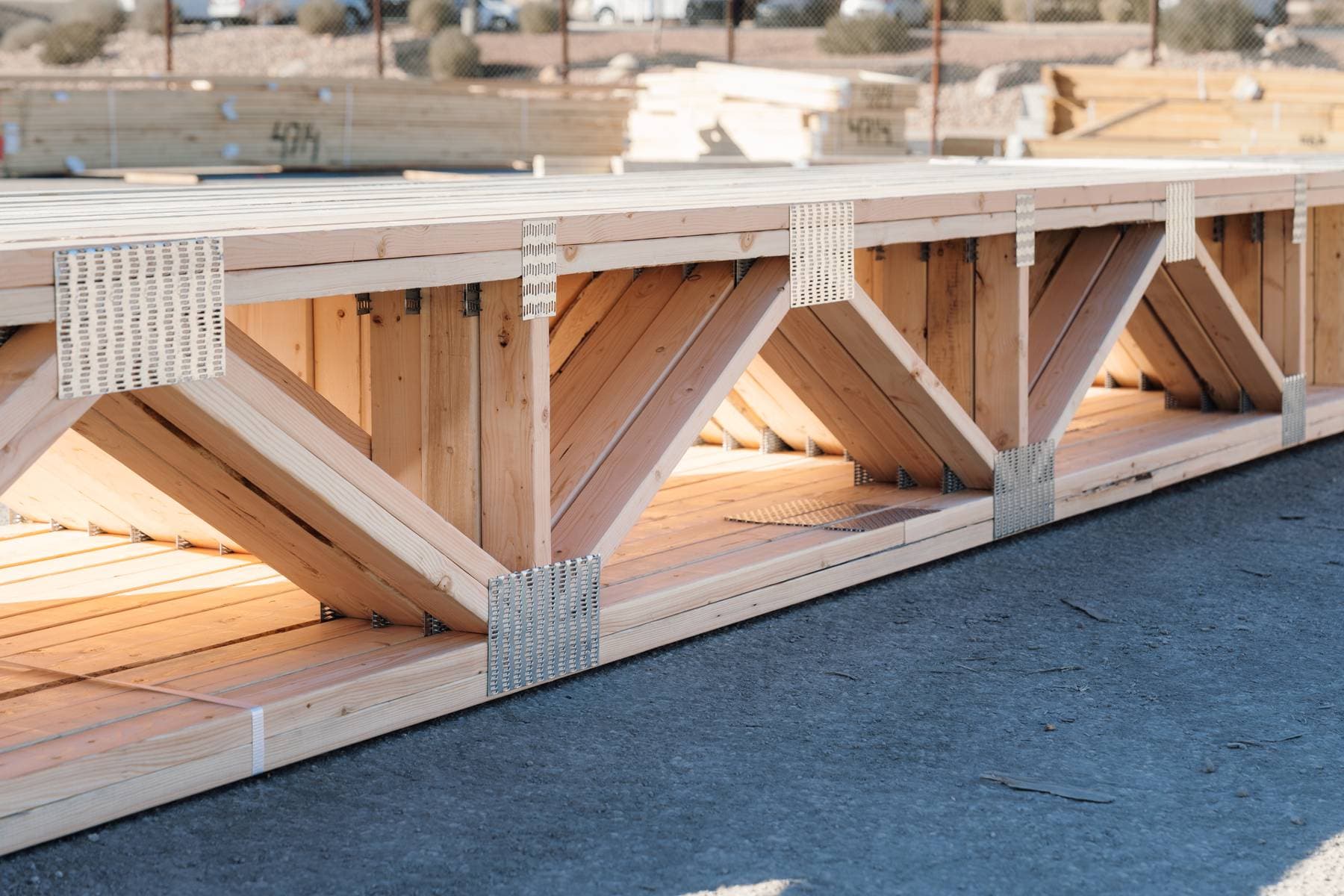
Floor trusses are engineered wood trusses designed to support floor systems. They are a popular alternative to traditional joists, especially in custom and multi‑story builds.
Where Floor Trusses Are Commonly Used
- Residential homes with open floor plans
- Multi‑story buildings
- Commercial projects
- Homes with complex plumbing, HVAC, or electrical systems
Key Benefits of Floor Trusses
How far can floor trusses span?
One of the most common questions builders ask. Floor trusses can span significantly farther than dimensional lumber joists, often reducing or eliminating the need for interior load‑bearing walls. This creates more flexibility in layout and design.
Easier mechanical runs
The open‑web design allows plumbing, electrical, and HVAC systems to pass through without excessive drilling or cutting—protecting structural integrity and saving labor time.
Flatter, stiffer floors
Because floor trusses are engineered and manufactured under controlled conditions, they provide consistent performance with less bounce and fewer callbacks.
Faster installation
Delivered ready to install, floor trusses help keep framing schedules tight and predictable.
What Are Roof Trusses?
Roof trusses are engineered components that support roofing materials and transfer loads safely to the walls and foundation. They replace traditional stick‑built rafters and are custom‑designed for each project.
This often leads builders to ask: what is the difference between trusses and rafters?
Rafters are cut and assembled on site, while trusses are engineered off‑site for strength, efficiency, and consistency—reducing labor and increasing accuracy.
Common Types of Roof Trusses
- Gable trusses
- Hip trusses
- Scissor and vaulted trusses
- Attic trusses
- Custom architectural trusses
Roof trusses are designed to meet:
- Snow and wind loads
- Seismic requirements
- Roof pitch and shape
- Local building codes
Why Are Trusses So Strong?
Trusses are strong because their triangular design distributes loads evenly across the structure. When properly engineered and installed, trusses handle heavy environmental loads while using less material than traditional framing—making them both durable and efficient.
This is why top‑rated truss manufacturers rely on precise engineering, quality materials, and experienced production teams.
Floor Trusses vs. Roof Trusses: Key Differences
While both are essential, they serve very different roles.
Floor trusses:
- Support live and dead loads from above
- Influence floor feel and performance
- Allow mechanical systems to run through the structure
Roof trusses:
- Support roofing systems and environmental loads
- Define the building’s roof shape
- Protect the structure from weather and structural stress
Understanding these differences helps builders order correctly and avoid costly redesigns.
Why Early Truss Planning Matters
One of the most common mistakes we see is waiting too long to involve a truss company. Truss design impacts layouts, inspections, and scheduling.
Early coordination helps ensure:
- Accurate truss layouts
- Clean submittal drawings
- Faster permitting and inspections
- Fewer field modifications
For builders searching “truss companies near me,” experience and communication matter just as much as pricing.
The Importance of Truss Submittals
Both floor and roof trusses require detailed submittal drawings for permitting and inspections. These documents show how the trusses were engineered and confirm code compliance.
Strong submittals:
- Reduce inspection delays
- Protect builders from liability
- Keep projects moving forward
This is especially valuable for owner‑builders navigating the process for the first time.
Who Builds Trusses and Why the Right Partner Matters
So, who builds trusses?
Experienced truss manufacturers combine engineering expertise, production knowledge, and real‑world jobsite experience.
At Lone Pine Truss & Building Supply, we blend modern design technology with decades of hands‑on production experience. We don’t just design trusses—we understand how they’re built, installed, and inspected.
We work closely with:
- Builders and general contractors
- Framers and installation crews
- Inspectors and engineers
Our goal is simple: make your job easier.
Final Thoughts
Floor trusses and roof trusses both play critical roles in successful construction projects. Knowing when and how to use each one helps avoid delays, reduce costs, and ensure long‑term performance.
Whether you’re planning a custom home, commercial build, or agricultural structure, choosing the right truss system—and the right truss partner—makes all the difference.
Planning an upcoming project?
Call Lone Pine Truss & Building Supply or request a quote today. You bring the vision—we’ll help make it happen.